

Sustainability and the environment
Home | Sustainability
Lime:
a natural material,
an element of life
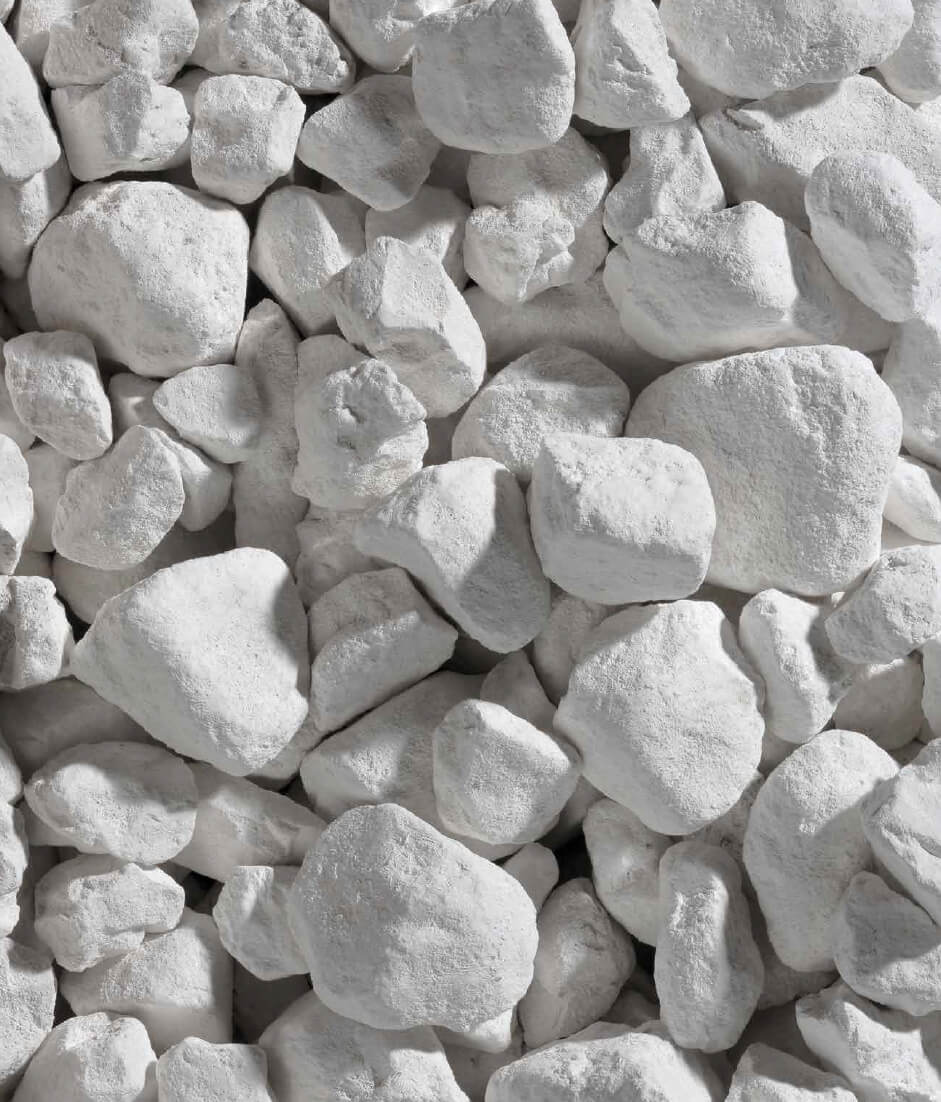
Lime is life. For Fassa Bortolo, the production of lime still represents a major investment project, enabling the Company to serve the entire lime market across its many industrial applications: steelmaking, construction, environmental protection, agriculture, and more.
To ensure excellence in every field of application, our lime undergoes the most rigorous and continuous quality controls – from the careful selection of the purest portion of the raw material to constant monitoring throughout the entire lime production cycle, from quarry to the end customer.
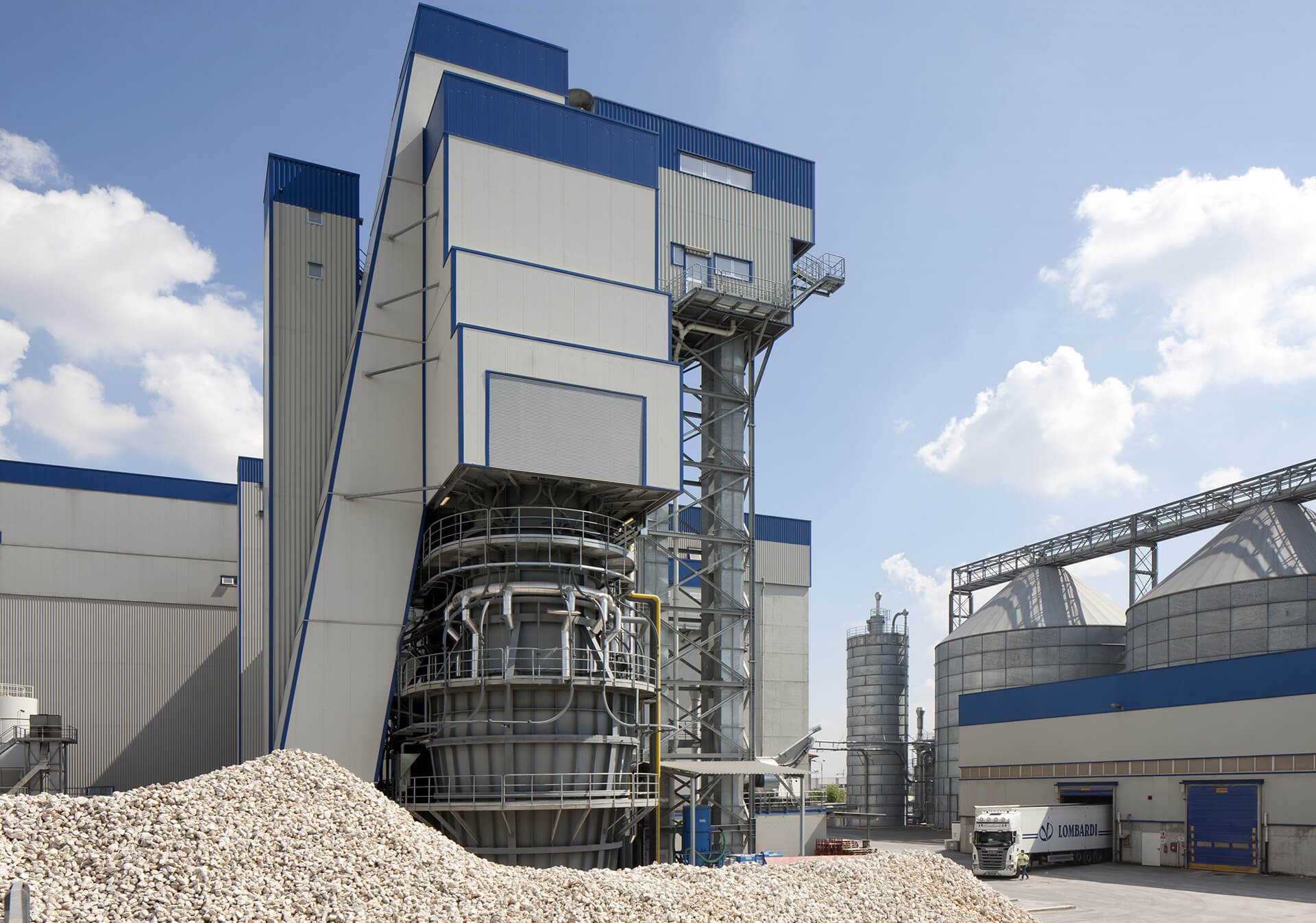
All our kilns operate on biomass fuel. Combined with the firing method developed by our technicians, this allows us to produce both calcitic and dolomitic lime of outstanding purity and reactivity.
The production process:
from extraction to the finished product
In our open-pit quarries, we use only cutting-edge extraction technologies. This ensures respect for the land, the environment, and the health of our workers.
We operate and manage our own limestone quarries using techniques designed with environmental remediation and reuse of the quarry site in mind once extraction is complete. Our philosophy is simple: everything should be as it was before. For this reason, we have developed a very strict “quarrying culture”, aimed at total respect for the natural environment that hosts us.
Our extraction activities are designed to respect geomorphological, hydrogeological, and landscape balances, minimising the environmental impact on the surrounding area. We also carry out constant measurements of dust and noise generated during operations, ensuring close control over environmental quality both in the workplace and in the surrounding environment. The best environmental remediation of a quarry must be planned at the design stage and carried out alongside extraction itself. Quarry operations should therefore be planned with the final restoration in mind. Conducting environmental remediation simultaneously with extraction makes it possible to closely monitor the actual results of the restoration process and verify compliance with the original design plans.

The design of extraction activities must take into account local needs and ensure the environmental compatibility of the operation in all its phases.
Careful design is therefore a prerequisite for mitigating the environmental impact of the operation on the landscape, flora, and fauna, and for ensuring adequate environmental recovery of the site at the end of extraction. It is essential to manage quarrying operations with techniques that are conceived with environmental remediation and reuse of the quarry area at the end of operations already in mind. Remediation plans do not necessarily have to reinstate the original pre-excavation state but may instead aim to enhance the site, making it available for public use (for educational, scientific, naturalistic, or sporting purposes, etc.) or otherwise redeveloping it with a view to sustainable development.
Open-pit quarrying is carried out by extracting the mineral in descending horizontal benches, enabling immediate remediation of the excavated slope. In quarries with underground crushing chambers – which also reduce the need for on-site road haulage – the level difference between the working and the storage area is overcome via a centrally located ore pass. This ore pass connects to the outside through a tunnel housing the primary crushing plant. Conveyors then carry the material to the surface yard at the tunnel exit, where final processing takes place.

Quarry report
by Legambiente
Fassa Bortolo has been selected as one of the examples of good practice in quarry management, since in all its extraction sites it carries out the activities required to achieve the best possible environmental restoration, planned right from the quarry design stage.
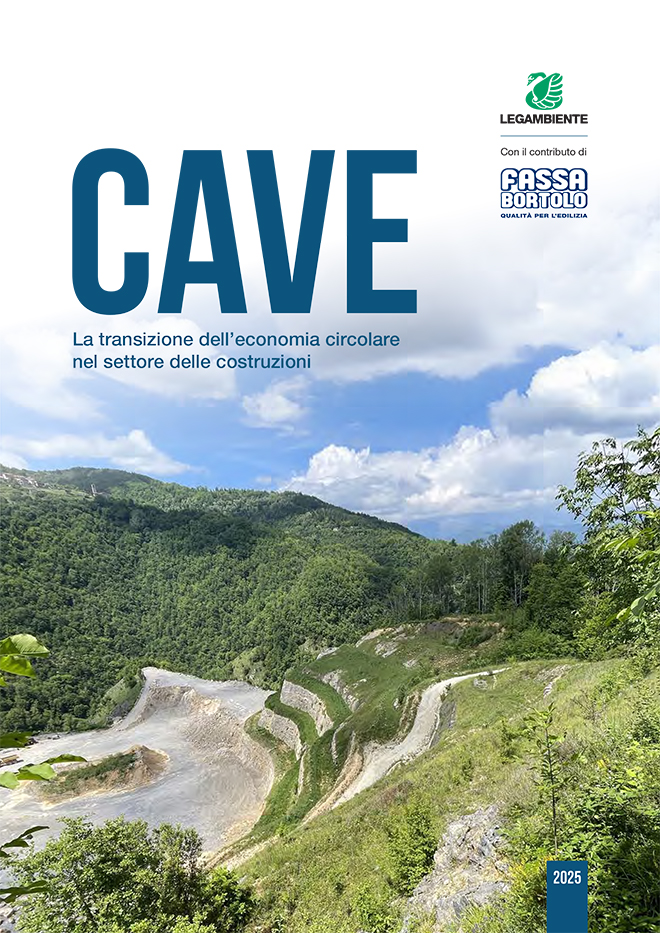
Legambiente periodically conducts research aimed at highlighting data and the related economic and environmental impacts of quarrying in Italy. The goal is to identify challenges and opportunities from a circular economy perspective.
«Fassa Bortolo has acquired over twenty years of experience in operating limestone quarries, managing several different types of activities. Quarries with underground crushing chambers are the most effective for the rational exploitation of mineral deposits while limiting the impact on the surrounding environment. In this case, the difference in height between the working face and the storage area is overcome via a centrally positioned ore pass in relation to the extraction activity. A tunnel then connects the crushing chamber to the outside, where the limestone is transported via conveyor belts for further crushing, screening, and storage of the finished products. The extracted material is used primarily for the production of pre-mixed renders, lime, and other construction products»
(2021 Quarry report – Legambiente).
Best practice:
the former “Gessi” quarry
in Moncalvo (Asti)
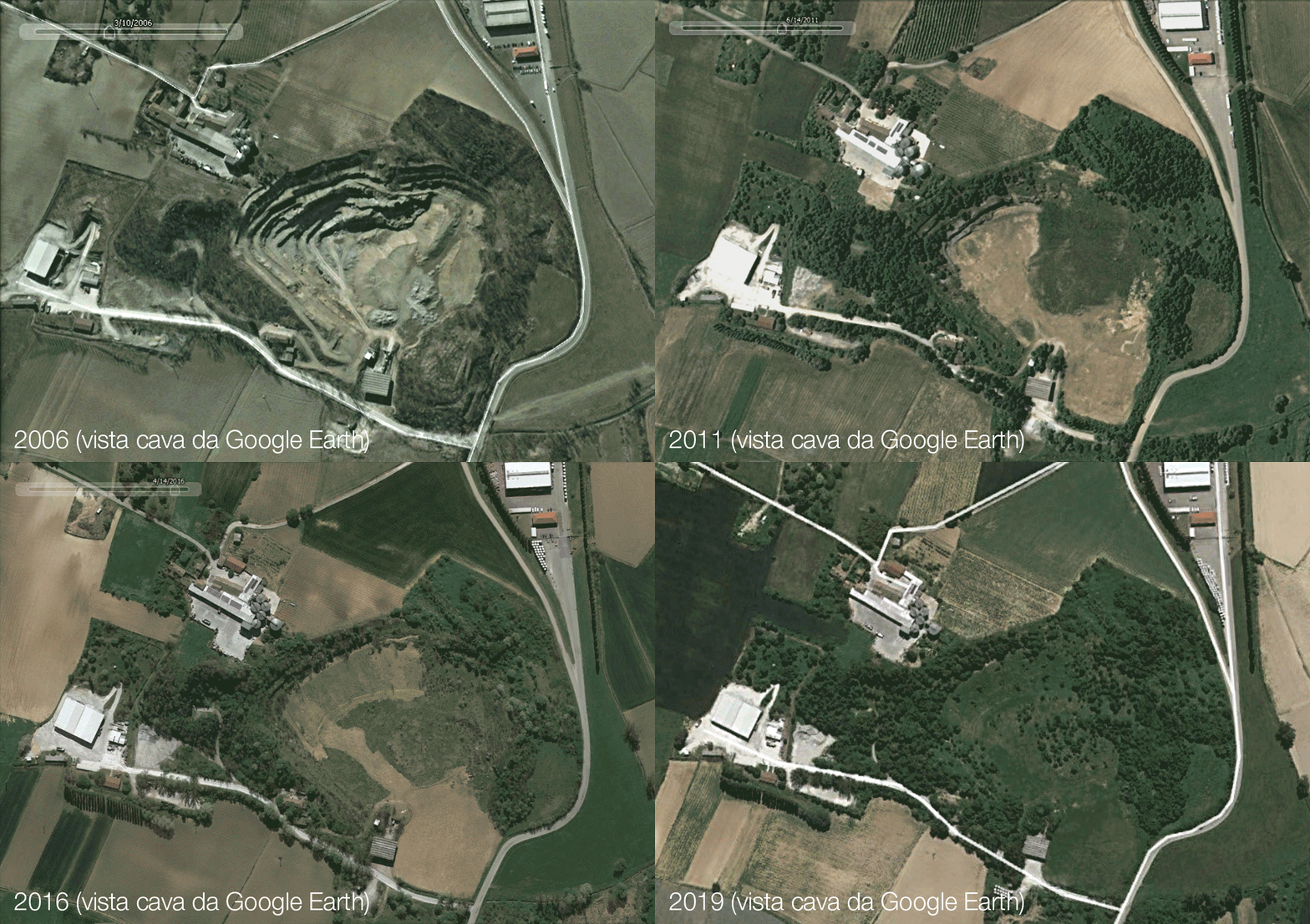
Among the examples of good practices in extraction management and concurrent site restoration mentioned by Legambiente is the former “Gessi” quarry in Moncalvo (Asti), acquired by Fassa Bortolo in 2000.
Previously an open-pit site already exploited by other operators, the quarry has undergone major environmental restoration. Today, the area has been completely reshaped, displaying a gentle morphology with a uniform grass cover across the entire surface. In 2016, the planting of trees and shrubs further contributed to the process of vegetation recovery, making the plant life similar to that of the surrounding hills.
Lime production stages
The lime cycle is crucial to the many applications of this material, enabling us to convert limestone – the base resource extracted from quarries – into a family of diverse products including quicklime, hydrated lime, and the suspension of lime in water (milk of lime).
Extraction of limestone
Lime production begins with the extraction of limestone from quarries and mines. Lime is made from limestone composed of high levels of calcium carbonate and/or dolomite (calcium magnesium carbonate), along with other minerals.
Most of the limestone used for lime production is quarried from open-pit sites, as in many major lime-producing areas the deposits are found in horizontal or only slightly sloping layers, generally easy to access.
Screening
Once extracted, the limestone is transported to crushing plants equipped with jaw crushers. A series of conveyors carries the material from the crusher to the screens and from there to various storage points.
Depending on the size required for subsequent processing, the limestone may undergo secondary screening to reduce it further; the processed stone can range from approximately 100 mm in diameter to grains as fine as sand (< 3 mm in diameter). After the specific sized pieces are washed, the material is sent to the kiln.
Calcination
Lime production involves burning calcium carbonate, or calcium and magnesium carbonate, to temperatures of up to 1,100 °C to release carbon dioxide and obtain the oxide, according to the following reaction: CaCO3 → CaO + CO2
The calcium oxide leaving the kiln is generally crushed, ground, and/or separated before being transferred to storage silos, or sent to the hydration plant to produce hydrated lime.
The calcination process takes place in double-shaft lime kilns, which can be simplified as two interconnected vertical
cylinders. The kiln gases leave the combustion shaft, pass through the bed of material, and flow via the interconnecting channel to other charges of limestone in the second shaft. The process is carried out in sequence, achieving excellent energy efficiency.
The lime cycle:
carbonatation
Carbonation is the process whereby, during application, lime hardens on exposure to air, losing water and absorbing CO2, thereby offsetting part of the CO2 emitted during production.

900/1000º



A study commissioned to the Polytechnic University of Milan by the European Lime Association – of which Fassa is an active member – found that around 33% of the CO2 emitted during lime production is reabsorbed through carbonation during various applications; with the use of specific techniques, this rate could rise to 40%.
Research into defining the role of lime in removing and permanently storing CO2 opens up interesting prospects and could give the European lime industry a new role in the EU campaign to achieve carbon neutrality by 2050.
The lime cycle reveals an ancient material with unique properties. The raw materials used to produce lime are calcitic or dolomitic limestones, CaCO3 and CaMg(CO3)2 respectively, formed through the precipitation of calcium carbonate in crystal-clear waters. This precipitation can occur directly in water or via living organisms such as algae, corals, and molluscs. Although limestones may appear very similar to the human eye, they are in fact highly variable and complex because of their formation process.
The purest carbonates, once extracted, crushed, and screened, are fed into lime kilns. Here, the heat supplied by the biomass fuels used by Fassa Bortolo releases the CO2 contained within the limestone in the form of carbonate, transforming the raw material into quicklime or calcium oxide (CaO). This oxide is highly reactive to water. When it comes into contact with water it transforms into calcium hydroxide, Ca(OH)2 – hydrated lime. This hydration reaction is rapid and releases heat. Once in this mineralogical form, if immersed in an aqueous solution, the lime can readily carbonate, absorbing atmospheric CO2 to once again form calcium carbonate – the raw material for lime production – thereby closing the cycle. This behaviour is the basis for the durability of lime putty and frescoes. Many masterpieces have survived to this day thanks to this very reaction.
Environmental Product Declaration (EPD)
In line with the company’s green vision, an LCA (Life Cycle Assessment) study has also been carried out for lime, enabling an objective evaluation of the product life cycle, from the production of raw materials right through to delivery to the customer.
LCA is a standardised method for assessing a product’s impact on the environment by analysing all, or selected, stages of its life cycle. The calculation includes preparation, production, distribution, and the end-of-life phase of any packaging used.
Based on this study, EPD (Environmental Product Declaration) documents have also been prepared for both Calcitic and Dolomitic Lime, providing a credible, transparent, and comparable account of environmental impacts.
The Carbon Footprint represents a subset of the data derived from an LCA study, with CO2 emissions being one of the most significant categories. The analysis made it possible to compare and measure the environmental impact generated by different production processes, expressed in kilograms of CO2 equivalent, in order to identify those with the greatest impact, demonstrate environmental performance through the most objective data possible, offset the CO2 produced, and work to reduce emissions at source.
For the preparation of the EPDs, our company chose to adopt a certified EPD Process system. This means that the entire process of data collection, LCA studies, and monitoring of environmental impacts is carried out internally through a dedicated management system certified by a third-party body according to the latest and most up-to-date international standards. In this way, the company has increased its awareness of the environmental impact of its products, demonstrating the highest level of commitment to sustainability and the utmost transparency towards stakeholders.
This approach has always been deeply rooted in all the company’s industrial and organisational policies – from the selection of raw materials and production facilities to choices made throughout the supply chain. Achieving the results we are proud to present today requires years of work, significant investment in human and financial resources, specialist know-how, and above all a deep-seated vision. In a company such as ours, the most important expression of this vision rests on a meticulous analysis of production processes, and thanks to this commitment, Fassa is a recognised reference player in the market. Indeed, our fossil-fuel-related CO2 emissions are significantly lower than the industry average, thanks in part to the use of biomass to fuel our kilns.
The EPD is therefore an important milestone that both distinguishes and qualifies Fassa Bortolo, and enables customers to choose a product – lime – not only for its quality but also on the basis of objective data that measure its environmental impact.
Explore products designed for your sector
Our technicians are available to guide you in selecting the best product for your processes.